

This matters because most organic gains come from compounded distribution and linking velocity across channels. Picture a content team that increased referral traffic by 35% within three months by repurposing pillar blog posts into targeted social sequences that linked back to optimized landing pages. Industry research shows coordinated cross-channel campaigns improve crawl frequency and link opportunities, which feeds SEO performance.
Scaleblogger can automate distribution and track which social assets drive keyword visibility, helping teams scale content sharing without manual overhead. You’ll learn practical tactics to tie social publishing to your SEO strategy, how to measure impact, and simple workflows to prioritize posts that create ranking lift.
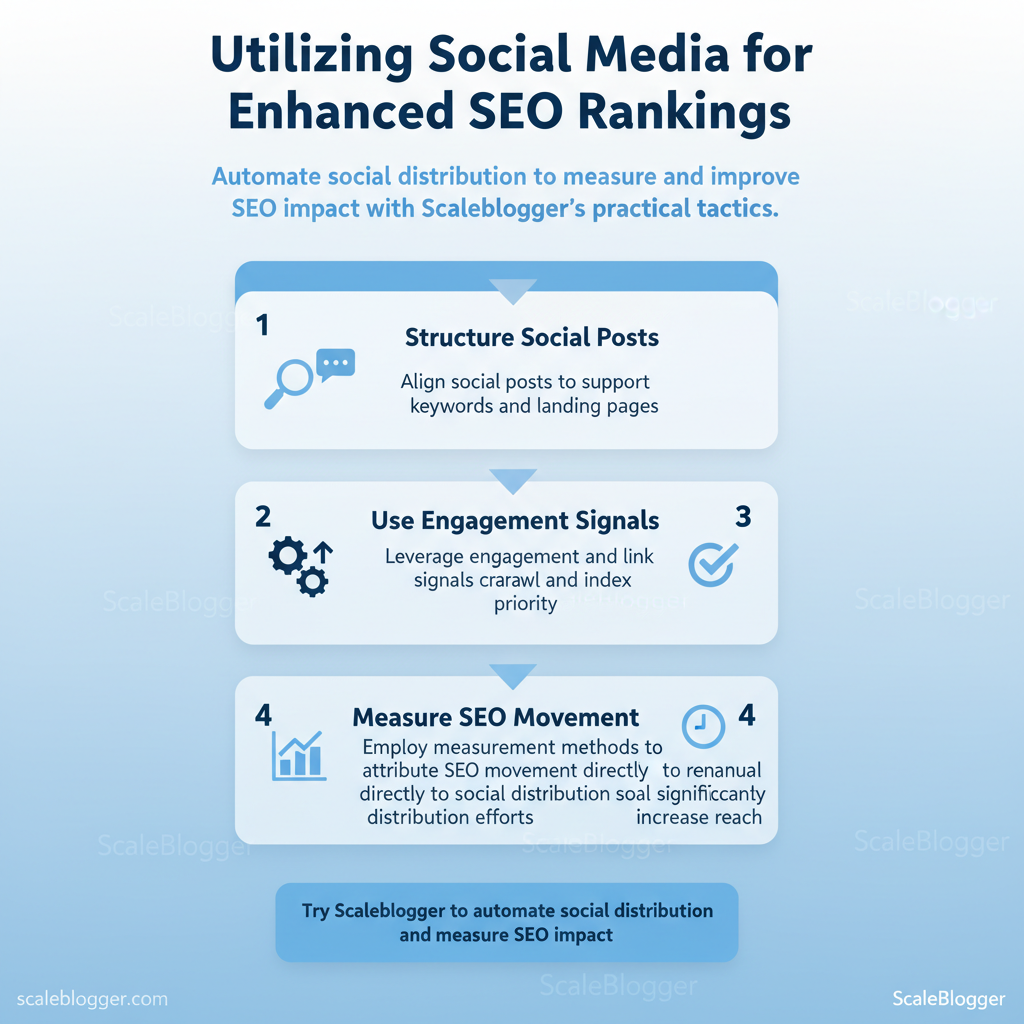
- How to structure social posts to support targeted keywords and landing pages
- Ways to use engagement and link signals to improve crawl and index priority
- Measurement methods to attribute SEO movement to social distribution
- Automation workflows that reduce manual scheduling and increase reach
How Social Media Impacts SEO
Social media doesn’t directly change your rankings in most search engines, but it meaningfully shapes the signals that search engines do use. Social platforms drive referral traffic, amplify visibility, and speed up link acquisition and branded searches — all of which feed into organic performance. What matters is treating social as an amplifier and feed for your content ecosystem, not as a shortcut to higher rankings.
Why social signals matter (even if not a direct ranking factor)
- Referral traffic: Social posts send visitors who increase pageviews and dwell time, which search engines observe as user engagement.
- Earned links: Content that spreads on social is more likely to be picked up by blogs and news sites, creating high-quality backlinks.
- Brand search volume: Strong social visibility leads to more branded queries, which correlate with higher organic CTR.
- Indexing and freshness: Social can accelerate content discovery and re-indexing by driving immediate visits and attention.
Tactical metrics and tools to track impact
- Referral traffic — use Google Analytics or GA4 to segment social channels.
- Backlinks earned — monitor with Ahrefs or Moz to see links originating after social campaigns.
- Impressions & engagement — platform analytics (Twitter/X, Meta, LinkedIn) to assess reach and share velocity.
- Organic CTR & rankings — Google Search Console for impressions, clicks, and position changes.
- Branded search volume — use GSC and Google Trends to detect lift in brand queries.
| Mechanism | Is it a direct ranking factor? | Typical short-term SEO impact | How to measure |
|---|---|---|---|
| Social shares | ✗ | Increased visibility; small immediate traffic boost | Platform analytics; GA4 referral sessions |
| Referral traffic | ✗ | Higher pageviews and dwell time; may improve behavioral signals | Google Analytics (session source/medium) |
| Link acquisition | ✗ (indirect) | New backlinks drive authority gains over weeks | Ahrefs/Moz backlink reports |
| Brand search volume | ✗ (indirect) | More branded queries improve organic CTR and conversions | Google Search Console; Google Trends |
| Content indexing speed | ✗ | Faster discovery and possible re-crawl requests | GSC URL inspection; monitoring index status |
If you want to automate social-to-blog workflows and measure impact end-to-end, tools that connect content publishing with analytics and backlink monitoring can save hours; for teams focused on scale, consider AI content automation or workflows that tie platform UTM data to ranking and backlink reports. Understanding these relationships helps teams prioritize social tactics that actually move organic metrics rather than chasing vanity metrics.
Creating Social Content That Helps SEO
Social content should do more than get likes — it should feed search signals, attract backlinks, and drive discoverable traffic. Focus on promoting linkable, referenceable assets with short, search-friendly microcontent; pair visuals and data with clear, trackable links; and optimize every post so search engines and humans can find and index the underlying resource. This approach raises visibility in social channels while creating measurable lift for organic search.
Why this works: search engines use social signals indirectly (through links and amplified discovery), while publishers and bloggers often find and link to well-packaged assets they can cite. Prioritize formats that invite sharing, embedding, and citation, and make it trivially easy for others to reference your work.
Content Types and Formats to Prioritize
- Infographics: compact visual summaries that get embedded and linked.
- Short video (under 60s): high reach and share volume on Reels/TikTok.
- Long-form article teaser: drives qualified visits and earns backlinks.
- Listicles / roundups: easy to scan and frequently referenced by other creators.
- Data-driven charts: original data is highly linkable and citable.
| Content format | Best use case | Primary SEO benefit | Ideal post template |
|---|---|---|---|
| Infographic | Explain complex process quickly | Embedable asset → backlinks | Image + brief hook + `Read more` link |
| Short video (≤60s) | Tease findings / show demo | High share/engagement → discovery | 3–5s hook, 20–40s value, CTAs |
| Long-form article teaser | Drive qualified traffic to pillar content | Improves dwell & backlink potential | 2-line blurb + headline + link |
| Listicle / roundup | Curated resources that attract mentions | Frequent citation in other posts | Numbered bullets + one-sentence links |
| Data-driven chart | Publish original research or benchmarks | Sourceable evidence → editorial links | Chart image + key stat + source link |
Optimization Checklist for Social Posts