

Why does a polished article still vanish from search results while a rougher competitor gets the clicks? The answer usually sits in search engine algorithms, which now judge far more than plain text.
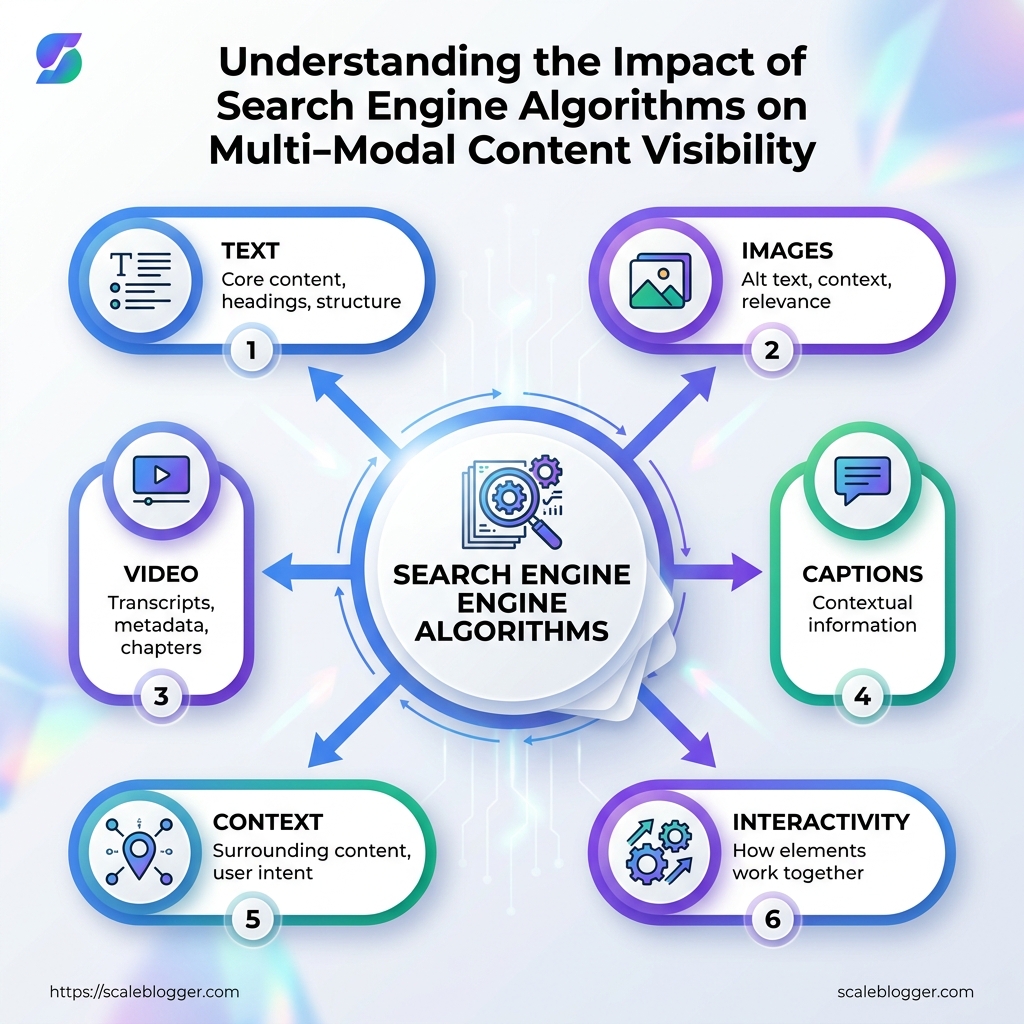
They read the page, but they also respond to images, video, captions, context, and the way those pieces work together.
That shift matters because multi-modal content visibility is no longer a niche concern.
Google’s own core update guidance says its ranking systems are always being adjusted, and not every change gets a loud announcement.
In 2026, Google also paired a core update with a broader AI Search push, which makes the search landscape feel even less forgiving for thin or one-note content.
The old habit of writing one good blog post and calling it done is fading fast.
Search now rewards pages that answer the same intent in more than one format, especially when a user wants speed, clarity, and proof at once.
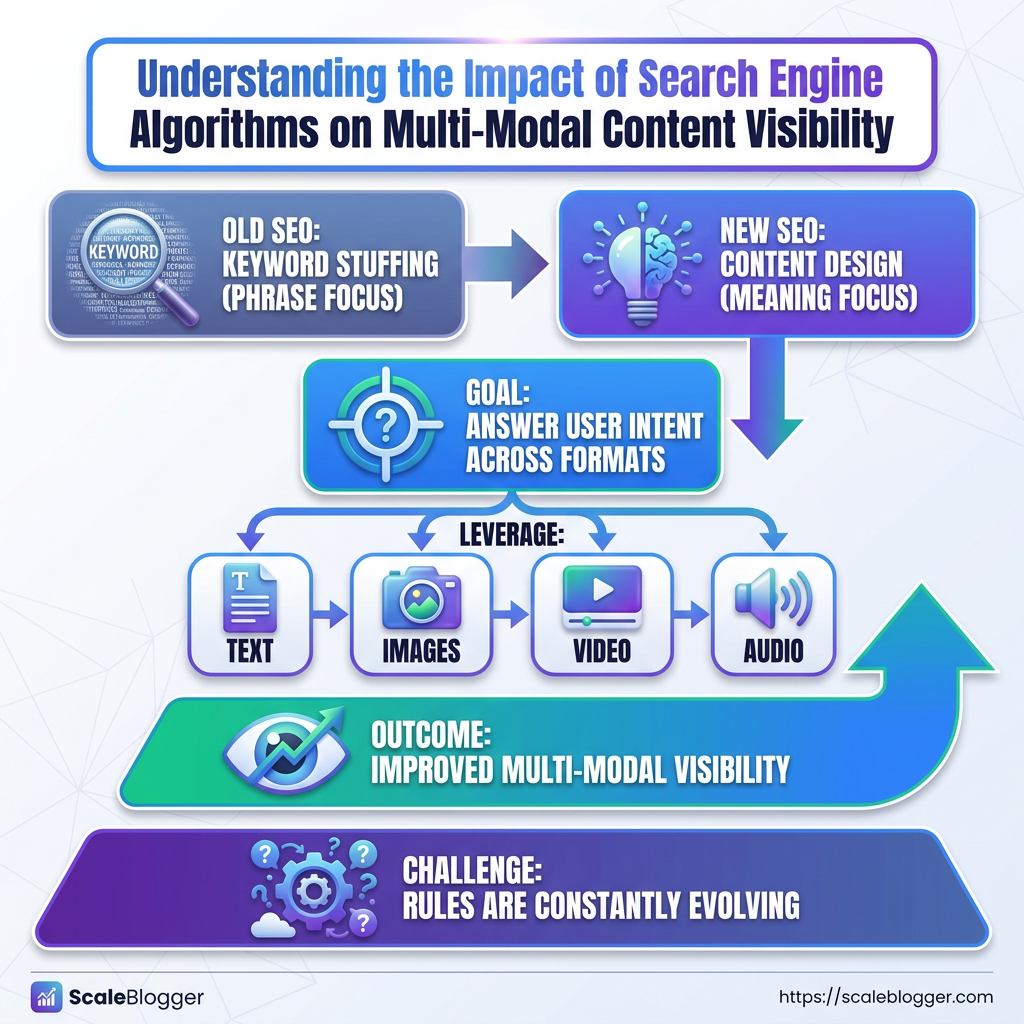
That is where smarter SEO strategies start to look less like keyword stuffing and more like content design.
The tricky part is that the rules keep moving.
A page can rank well for text queries and still underperform when search surfaces a video clip, an image result, or an AI-generated answer card.
If the content ecosystem around a page does not match how people search, visibility slips quietly, and traffic follows.
Quick Answer: Search visibility depends on whether you satisfy the same user intent with format-specific proof—not just polished text. Text should provide clarity and entities, while images, video, and audio each supply machine-readable context (alt text, captions, transcripts, titles) that helps search systems confidently interpret what each asset is and how it supports the overall idea. Build a small multi-modal cluster for one intent (for example: a text answer plus a supporting video/image with consistent metadata), and measure format discovery separately so you can see which surface is earning impressions and which is earning clicks.
How Search Engine Algorithms Decide What Gets Seen
Why does one page with decent writing disappear, while another, nearly identical page earns clicks?
The answer usually sits in the signals around the content—not just the words on the page. Search engines compare relevance, usefulness, trust signals, freshness, and how well a page matches the searcher’s intent.
That’s why similar content can produce very different outcomes.
Two pages can cover the same topic, but one better satisfies the query because it uses clearer entities, answers the question more directly, and presents the information in a format search systems can reliably interpret.
Similar pages, different outcomes
A page about “best running shoes” might lose to a shorter guide if that guide matches buying intent better.
The algorithm is not ranking for word count—it’s ranking for likely satisfaction.
A query like “apple benefits” shows how entity understanding matters.
The system has to decide whether the user means the fruit or the company, then use context from the query, surrounding terms, and other signals to interpret intent.
Signals across text, images, video, and audio
Text still carries a heavy load.
Titles, headings, internal links, topical depth, and clear language help the system map relevance.
But multi-modal content visibility depends on more than copy:
- Text relevance: clear topic coverage, direct answers to the query, and strong topical fit.
- Image signals: alt text, file names, and matching nearby context.
- Video signals: titles, descriptions, transcripts, chapters, and spoken keyword evidence.
- Audio signals: transcripts and metadata that explain what’s being said.
Intent and entity understanding
Search systems try to answer a bigger question than “does this page mention the keyword?” They evaluate whether the page fits the intent behind the query and whether the entities on the page connect in a sensible way.
That’s where SEO strategies often fail.
They chase phrases instead of meaning.
Pages that explain the topic, name the right entities, and make context obvious tend to earn visibility more often than pages built around keyword repetition.
A quick test: if a reader landed on the page cold, would the topic, format, and purpose be obvious within seconds? Search engines are looking for a similar kind of clarity.
Even in a noisy results page, clarity wins.
The pages that get seen usually make the machine’s job easier and the reader’s job easier at the same time.
What Multi-Modal Content Visibility Means in Practice
Why do some brands get noticed through a blog post, while others win attention via a thumbnail, a short clip, or even a podcast snippet?
That’s the real shape of multi-modal content visibility.
It means one idea can surface in different formats, on different search surfaces, and at different moments in the buyer journey.
For creators who publish at scale, that shifts the goal from “rank my page” to “make the right version of the idea understandable across channels.”
A single article may rank in organic search, show up in image results, get clipped into a video result, or be repurposed into a social post that brings traffic back later.
That’s why strong SEO now looks at the content system—not just the single URL.
How visibility changes by format
| Content format | Primary ranking signals | Common search surface | Best-fit intent | Visibility risk |
|---|---|---|---|---|
| Text articles | Relevance, depth, internal links, freshness, clarity | Organic results, featured snippets, AI summaries | Research, comparison, explanation | Can be crowded by stronger authorities |
| Images and infographics | Alt text, surrounding text, file names, page context | Image search, universal results | Visual identification, quick understanding | Often ignored if context is weak |
| Video content | Title, description, engagement, watch behavior, transcript quality | Video results, universal results, platform feeds | How-to, demos, product evaluation | Weak metadata can hide strong content |
| Audio content | Episode titles, show notes, transcripts, topic focus | Podcast platforms, search index snippets | Deep dives, interviews, ongoing learning | Discovery is limited without transcripts |
| Short-form social clips | Hook, retention, captions, shares, topic match | Social feeds, platform search, embedded results | Fast education, curiosity, trend capture | Fades quickly without strong republishing |
The pattern is pretty simple.
Text often anchors authority, but other formats frequently win the first glance.
Search engines and platform surfaces reward the version of your idea that best fits the moment—not always the longest version.
If one asset can feed multiple surfaces, the odds of being seen go up without doubling the writing load.
For teams publishing often, that’s where scale stops being noisy and starts being useful.
SEO Strategies That Improve Visibility Across Formats
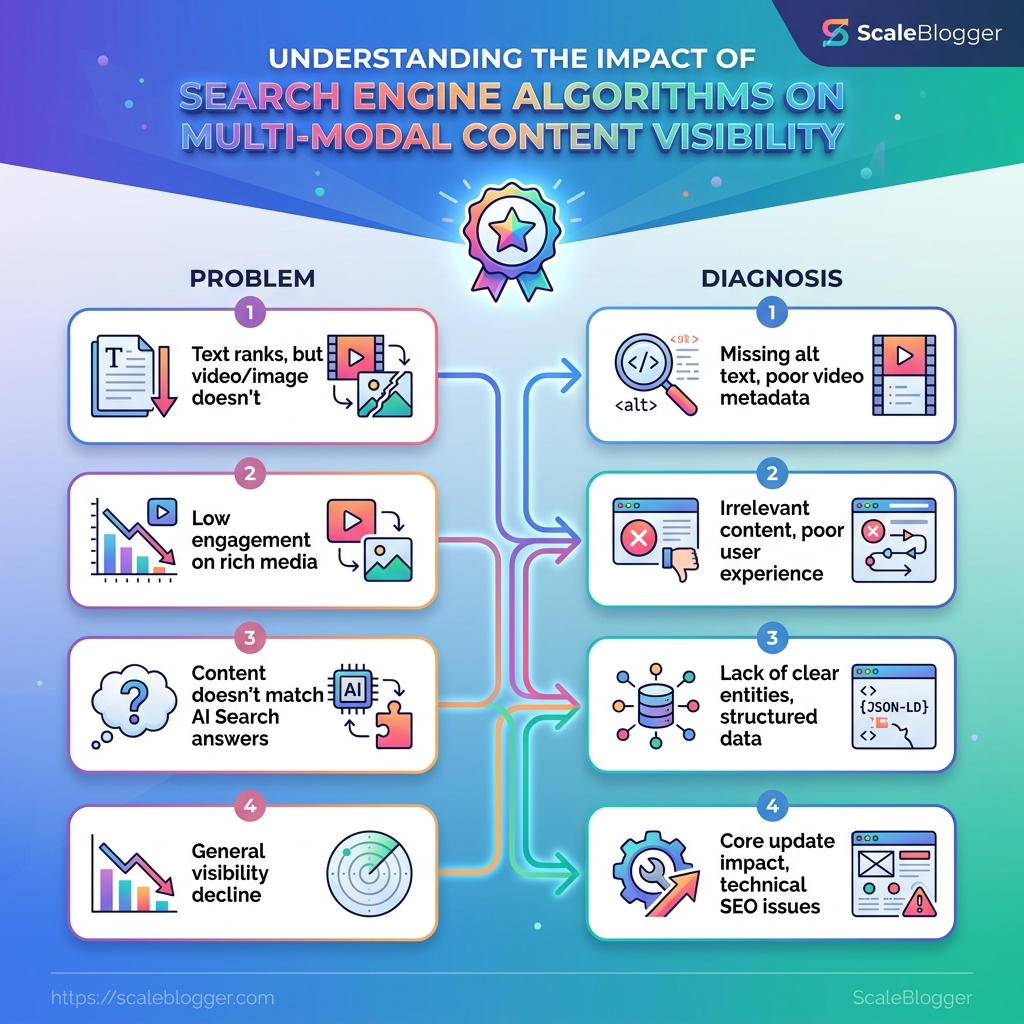
Why do some pages earn visibility on one surface and vanish on another? Usually, the content isn’t the problem—the format-specific signals around it are.
A blog post, a YouTube video, a podcast episode, and a LinkedIn carousel each need setup that matches how that surface interprets intent. So before you publish, design the asset the way the platform (and search) needs to understand it.
Start before production, not after. If the query is best answered with a quick how-to, don’t force it into a long explainer. If it’s comparison-heavy, give the user structure they can scan fast.
Format-specific metadata does the quiet work:
- Match intent first: Decide whether the query needs explanation, proof, steps, or a visual demo before drafting.
- Write unique metadata: Tailor title tags, descriptions, and social captions to the format (not one generic summary reused everywhere).
- Add transcripts and captions: These improve clarity for users and make audio/video understandable to crawlers.
- Use topical clusters: Connect related assets so search engines see a coherent subject map.
- Cross-link by purpose: Link a tutorial to evidence (case study/demo), and link supporting pages back to the main hub.
A simple example: a content repurposing cluster can include a pillar article, a short transcript-led video, a FAQ page, and a checklist—each serving a different ‘reason to click’ while internal links tie everything to the same entities and intent.
That’s also where tools like Scaleblogger fit: format-aware drafting and publishing help keep metadata consistent across assets without flattening every version into the same shape. When the format matches intent, visibility becomes easier to earn across search, social, and AI-powered surfaces.
How AI and Automation Change the Content Workflow
Why does a content team still feel stuck after the draft is done?
Because the hard part usually isn’t writing a single article.
It’s moving clean ideas through drafting, review, repurposing, publishing, and follow-up without losing momentum.
AI writing tools fit best in the center of that pipeline.
They’re strongest when they handle first drafts, topic expansion, formatting variants, and content handoffs—while humans keep control of judgment, brand voice, and editorial direction.
That split matters because multi-modal visibility depends on more than output volume.
It depends on whether every format version is structured, contextualized, and consistent with the intent it targets.
In practice, AI speeds up the parts that usually create drag.
It can turn one approved idea into a blog outline, a social caption set, a newsletter version, and a CMS-ready draft in one pass.
At Scaleblogger, our workflow is built around that handoff.
We support drafting, repurposing, and scheduling so teams spend less time stitching tools together and more time approving work that already fits the channel.
- Drafting: AI can generate a structured first pass fast, which helps teams avoid the empty-page problem.
- Repurposing: One article can become short posts, platform-specific snippets, and supporting copy for different formats.
- Scheduling: Automation can queue content for publish times, reducing the back-and-forth that slows launches.
- Quality control: Humans still need to catch weak claims, awkward phrasing, and anything that sounds generic.
> Automation can create volume and consistency, but it cannot rescue weak ideas or fake subject knowledge.
It also cannot guarantee visibility gains on its own.
Search systems still reward usefulness, clarity, and trust—not just speed.
A good workflow uses AI for motion and people for judgment.
That combination is what makes multi-modal content visibility and modern SEO feel manageable instead of chaotic.
How to Measure Whether Multi-Modal SEO Is Working
How do you know whether multi-modal SEO is actually paying off?
When search results show different formats for similar topics, you can’t measure success by looking at one ranking report—or by blending every signal into a single number.
The cleanest way is to separate visibility, engagement, and assisted discovery.
A search impression, a video view, and an image referral are not interchangeable signals, even when they come from the same topic cluster.
That separation matters because multi-modal content visibility usually grows unevenly.
A strong image can drive discovery before a page earns clicks, while video can build trust long before it turns into a visit.
Metrics worth tracking
| Metric | What it indicates | Best format to track | Tools or sources | Action if underperforming |
|---|---|---|---|---|
| Impressions | How often search systems are showing the asset | Blog posts, video landing pages, image-rich pages | Google Search Console | Broaden topic coverage, improve titles, add internal links, and refresh supporting context |
| Clicks | Whether the snippet or preview is compelling enough to earn attention | All formats with search exposure | Google Search Console, analytics platforms | Rework titles, meta descriptions, thumbnails, and on-page hooks to match intent |
| Average position | Relative visibility for a query set (not the full story) | Query-level page tracking | Google Search Console, rank tracking tools | Group queries by intent, expand related subtopics, and fix weak internal linking |
| Video views from search | Whether video is being surfaced and chosen from search results | Short clips, explainers, tutorials | Video platform analytics, Google Search Console | Tighten the opening seconds, add transcripts, improve titles, and test chapter markers |
| Image referrals | Whether visual assets are bringing discovery traffic | Infographics, product shots, diagrams, thumbnails | Analytics platforms, image referral reports, Google Search Console | Rename files clearly, rewrite alt text, and place images near relevant copy |
The biggest mistake is mixing these numbers into one blended score.
A page with flat clicks can still be doing well if image referrals and video views are climbing—especially when discovery happens before the click.
For benchmarking, compare each format against its own baseline, not against another format’s best week.
A 28-day rolling average works well because it smooths out small swings without hiding real change.
A good measurement setup makes every format answer its own question.
Text should earn clicks, video should earn views, and images should open the door to discovery.
When those signals stay separate, the picture gets much clearer.
Common Visibility Problems and How to Diagnose Them
A polished article can still disappear from sight.
When that happens, the problem is often not the writing itself, but the way the page fits the query.
Search engine algorithms are usually looking for a shape, not just a topic.
Google says core updates can shift how pages are evaluated over time, even when the page itself has not changed much, which is why a strong piece can slide if it no longer matches what searchers want Google Search’s Core Updates.
The 2026 search environment makes that gap easier to miss.
Google’s AI-driven search changes create more entry points for content, so format, context, and clarity now influence multi-modal content visibility as much as raw topical depth A new era for AI Search.
Three visibility failures show up again and again
- Format mismatch: A 2,000-word explainer can lose to a short comparison table when the query wants a decision, not a lesson. Check the current results and ask whether your page matches the dominant shape.
- Weak context: Vague headings, thin internal links, and missing entity names make the page hard to place. If a stranger cannot tell what the asset is about in ten seconds, search systems may struggle too.
- Speed gaps: Fast publishing often leaves duplicate intros, generic examples, and stale references behind. That kind of rush cuts discoverability because it weakens the page’s specific signals.
A fast diagnosis works better than guesswork
Start with the query itself, then compare it against the strongest pages already ranking.
If the top results are short answers, video clips, or product-led pages, a long essay is probably the wrong format.
Next, read the page like a crawler would.
Are the title, headings, and opening paragraphs specific enough to anchor the topic, and do they name the people, products, or concepts that matter?
Finally, inspect the production process.
In the May 2026 core update coverage, Google’s wider AI search changes were already creating mixed signals during rollout, which is a good reminder that rushed publishing can hide quality problems until traffic drops Google Launches Core Update Amid I/O AI Search Overhaul.
When a page underperforms, the fix is usually cleaner than it looks.
Match the format, sharpen the context, and slow the final pass just enough to remove the sloppy bits that search engines notice first.
A Practical Workflow for Content Teams
Turn multi-modal SEO into a repeatable launch routine: the handoff must connect planning → production → distribution → measurement, with format-specific assets treated as one coordinated system.
A repeatable path for every topic
Start with one topic cluster, then plan every format before anyone writes a sentence. The blog post, thumbnail, short clip, social cutdown, and image brief should all come from the same intent map.
- Plan the cluster first. Define the core query, supporting angles, and the formats that deserve attention.
- Draft from one source brief. Build the article first, then extract quotes, hooks, and visual notes from that master file.
- Tag everything consistently. Use the same naming rules, captions, alt text, and platform tags across assets.
- Review for channel fit. A caption for LinkedIn should sound like a LinkedIn hook; a video title should match how users scan that surface.
- Measure by role. Track which asset drives discovery, which supports engagement, and which feeds the next piece in the cluster.
Who owns what
Strategy should own topic selection, search intent, and publish order.
Production handles writing, design, editing, and asset tagging.
Analytics watches performance by format (not only by URL) so weak spots show up quickly.
> A useful check: if one person can move an asset from draft to distribution without asking three other people what happens next, the workflow is probably too loose.
Folding it into the calendar
The easiest way to keep multi-modal SEO from becoming three separate chores is to add format columns beside each publish date—so article, video, and social assets ship as one launch.
It also keeps multi-modal content visibility tied to planning instead of luck.
In our pipeline at Scaleblogger, that single-calendar approach is what keeps creation, tagging, and publishing moving in the same direction.
Visibility Belongs to the Whole Content Package
The big lesson is simple: search engine algorithms do not reward polish alone.
They reward content that proves relevance in more than one format, with clear signals, useful structure, and enough context for different surfaces to understand it.
That is why a strong article can still miss the mark if it never expands into video, social snippets, FAQs, or supporting assets that strengthen multi-modal content visibility.
The example that matters most is the one from the workflow section.
A single article stops being a single shot when it is broken into search-friendly and platform-friendly pieces, and that is where smarter SEO strategies start paying off.
We see the same pattern again and again: the pages that rank and circulate best are the ones built for reuse, measurement, and revision, not one-and-done publishing.
If you want a practical move for today, audit one recent article and give it three extra lives: a short social post, a concise FAQ block, and a visual or video version of the core idea.
Track what changes in impressions, clicks, and engagement over the next two weeks, then repeat what works.
If your team wants that process to run with less manual drag, our automation workflow can help make it repeatable.
