

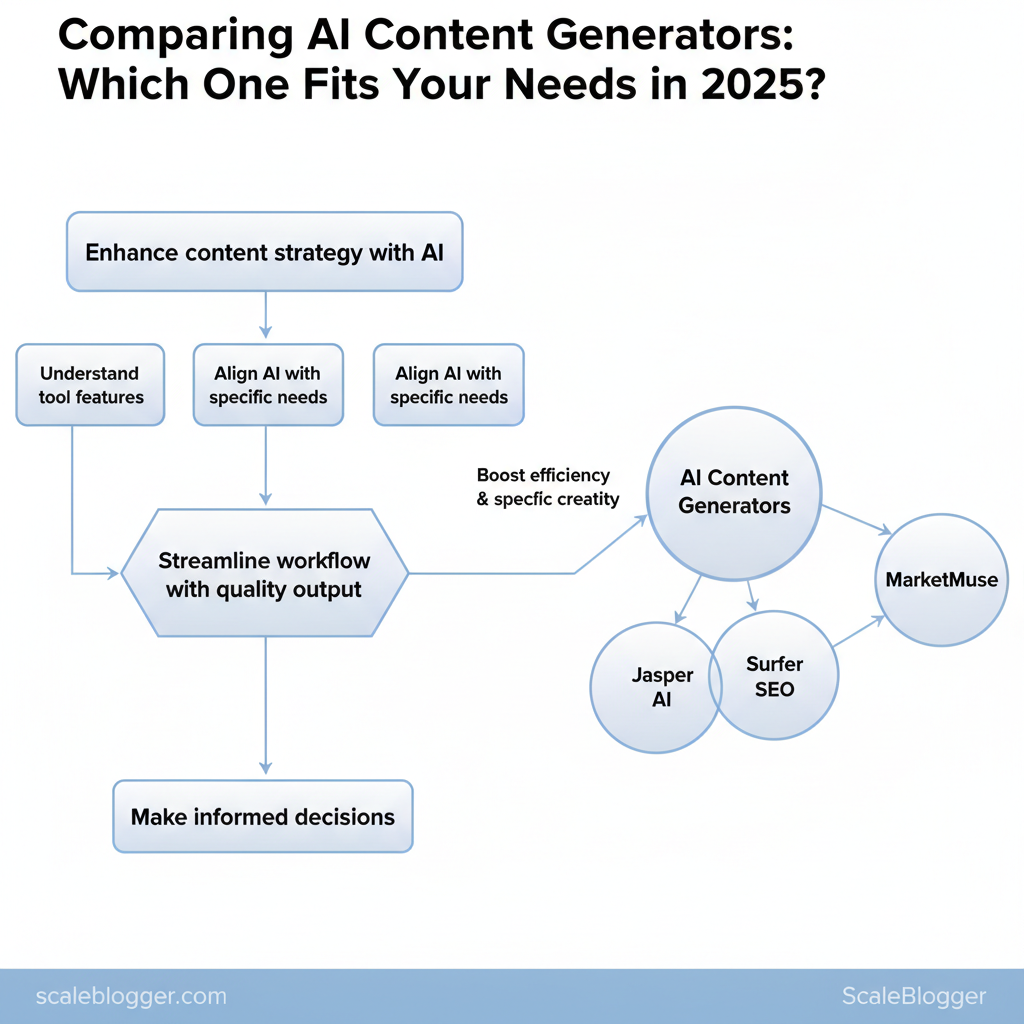
In 2025, selecting the right AI content generator can drastically enhance your content strategy. Many tools are available on the market. Understanding their unique features is important for improving your visibility and engagement. As businesses increasingly rely on AI-driven solutions, finding a tool that aligns with your specific needs can set you apart from the competition.
Industry research suggests that companies utilizing AI content generators see a significant boost in efficiency and creativity. This trend isn’t just a passing phase; it’s transforming how we approach content creation. Imagine streamlining your workflow while maintaining high-quality output—this is the potential of the right AI tool.
Let’s compare popular AI content generators and see how each tool fits into your strategy.
- Explore the unique benefits of Scaleblogger’s AI-driven solutions for transforming your content strategy.
- Understand key features and differences among top competitors.
- Learn how to assess which AI generator best meets your specific requirements.
Navigating these options may feel overwhelming, but the right insights will help you make an informed choice that elevates your content strategy.
> [!TIP] For expert insights on optimizing your content strategy, consider visiting Scaleblogger.com.
Table of Contents
- What is an AI Content Generator?
- Section Content
- Key Features to Consider
- Popular AI Content Generators in 2025
- Pros and Cons of AI Content Generators
- How to Choose the Right AI Content Generator
- Future Trends in AI Content Generation
> Key Takeaway:
What is an AI Content Generator?
An AI content generator is a tool that automates writing using artificial intelligence.
What is an AI Content Generator?
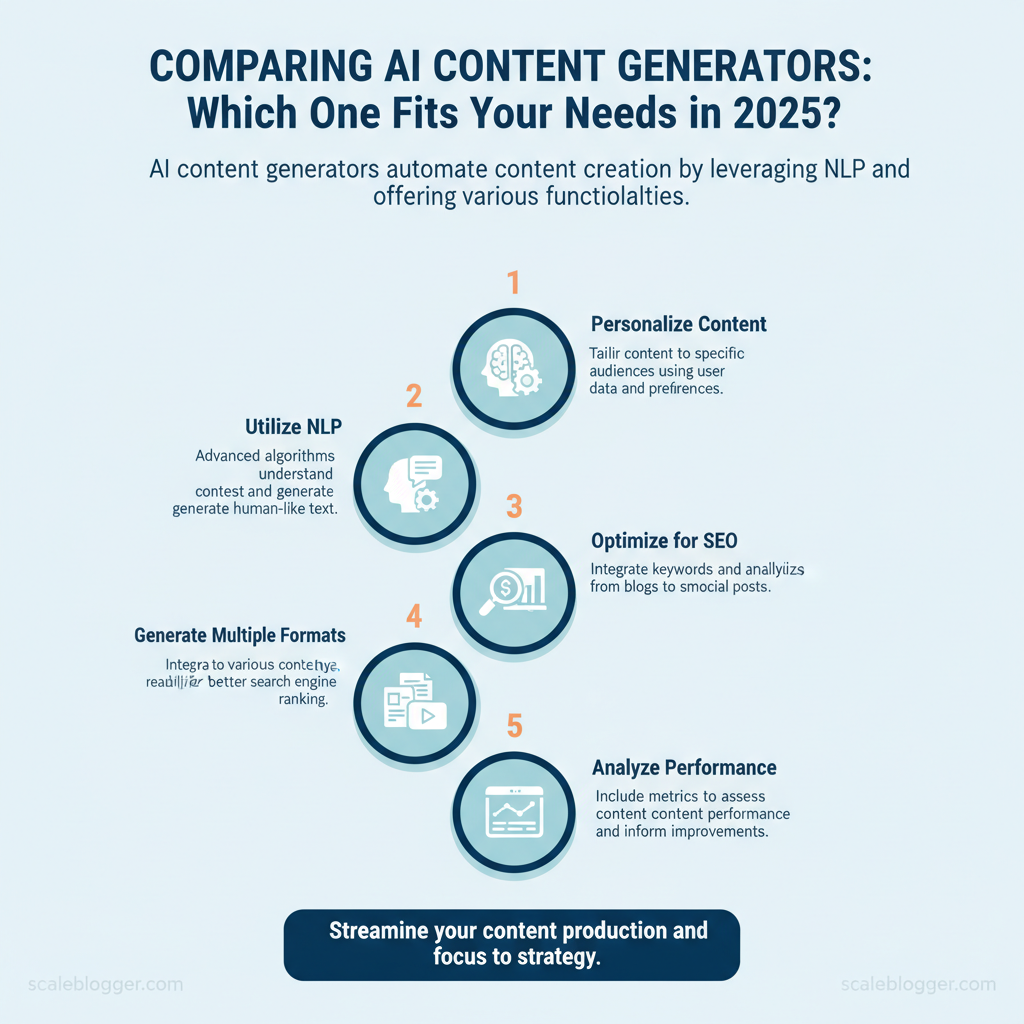
An AI content generator is a tool that automates writing using artificial intelligence. These systems use natural language processing (NLP) to understand and create text that people find appealing. AI content generators analyze vast data sets to create articles, blog posts, social media updates, and more. They keep a consistent voice and style.
The functionality of these tools varies, but they often include features like topic generation, SEO content tips, and performance tracking, allowing you to improve your content strategy efficiently.
The benefits of using an AI content generator are significant. They save time, reduce manual effort, and often produce high-quality content that can improve visibility and engagement across digital platforms. For instance, businesses can their content production process, allowing them to focus more on strategy and less on the repetitive aspects of writing.
com/blog/content-pipeline-tutorial/” class=”internal-link”>This alignment with modern content strategies highlights the growing reliance on automation and AI technologies in the content marketing landscape.
Functionality of AI Content Generators
AI content generators operate through a few core functionalities that make them attractive to marketers and content creators alike:
- Natural Language Processing: They advanced algorithms to understand context and generate human-like text.
- Content Personalization: Many tools can tailor content to specific audiences by analyzing user data and preferences.
- Multiple Formats: From blogs to social media posts, these generators can adapt to various content types.
- Performance Analytics: They often include metrics to assess how well content is performing, allowing for continuous improvement.
These capabilities illustrate how AI content generators can significantly enhance a team’s efficiency and effectiveness.
Benefits of Using AI Content Generators
Implementing an AI content generator into your content strategy offers numerous advantages:
- Time Savings: Automating content creation allows teams to allocate resources to other essential tasks.
- Consistency: AI tools maintain a consistent tone and style across different pieces of content.
- Scalability: Companies can produce large volumes of content without a proportional increase in workload.
- Data-Driven Insights: AI can analyze performance data to inform future content strategies, optimizing for better results.
- Cost Efficiency: Reduced need for extensive human resources can lead to lower operational costs.
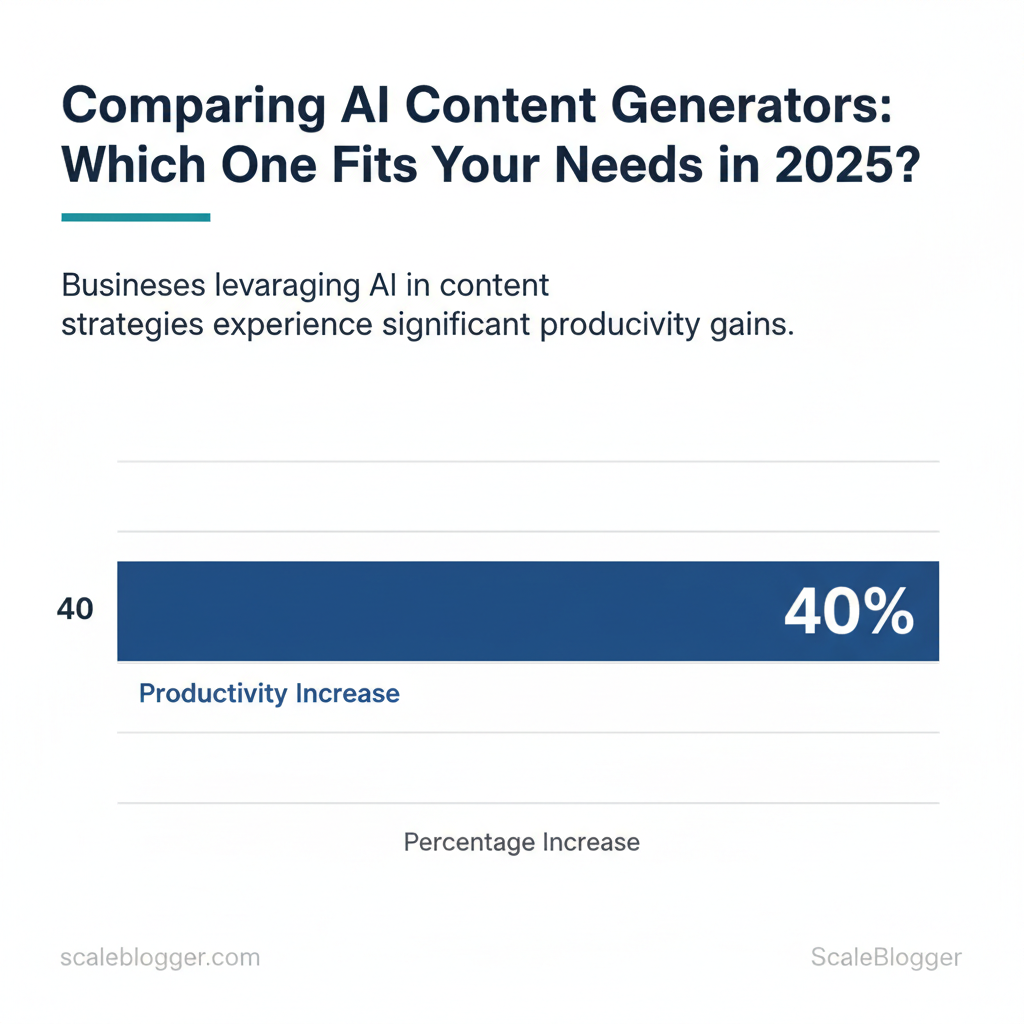
> Some studies suggest that businesses leveraging AI in their content strategies may experience an increase in productivity, potentially around 40%.*
The integration of AI content generators into a marketing strategy is not just a trend; it’s a practical solution for improving content quality and operational efficiency. As the digital landscape evolves, these tools provide a way to stay competitive and relevant. Embracing this technology can free up creative minds to focus on higher-level strategic initiatives while ensuring that the content pipeline remains full and engaging.
> Key Takeaway:
Key Features to Consider
When evaluating AI content generators, usability and user interface play crucial roles in determining how effectively you can these tools for your content strategy. A well-designed interface enhances user experience, reduces the learning curve, and provides the necessary support resources to maximize the tool’s potential. Here are some essential features to consider that can significantly impact your workflow and output quality.
User Experience
The user interface (UI) should be intuitive and straightforward, allowing users to navigate the platform with ease. A cluttered or complicated interface can hinder productivity and lead to frustration. Look for features like:
- Drag-and-drop functionality: Makes it simple to organize content pieces.
- Customizable dashboards: Personalize your workspace for quick access to frequently used tools.
- Preview options: Instant visual feedback on how your content will appear once published.
Many leading platforms prioritize user-friendly designs to ensure creators can focus on content rather than getting bogged down by technicalities.
Learning Curve
A minimal learning curve is vital for teams new to AI tools. An effective platform should offer:
- Guided tutorials and walkthroughs: Help users understand features without extensive prior knowledge.
- Interactive help sections: Allow users to find solutions quickly when issues arise.
- Community forums: Engage with other users for tips, tricks, and troubleshooting advice.
Tools that provide these resources often see faster adoption rates and higher user satisfaction, enabling teams to hit the ground running.
Support Resources
support can make a significant difference, especially when challenges arise. Check for:
- 24/7 customer support: Essential for resolving urgent issues.
- Comprehensive documentation: Detailed guides and FAQs can help users troubleshoot independently.
- Regular updates and improvements: Companies that continuously enhance their platforms tend to stay ahead of user needs.
Having strong support resources ensures that you can maximize the value derived from any AI content generator.
Table: List features of various AI content generators.
| Feature | Importance | Top Tools |
|---|---|---|
| User Interface | Easy navigation and usability | Jasper, Copy.ai, Writesonic |
| Language Support | Multi-language capabilities | ChatGPT, Grammarly, Jasper |
| SEO Optimization | Helps in ranking content | Surfer SEO, MarketMuse |
| Content Formats | Supports various media types | ContentBot, Copy.ai |
| Pricing | Affordability and value | Writesonic ($29/month), Jasper ($39/month) |
As you explore different AI content generators, prioritize tools that excel in usability and provide comprehensive support. This focus will not only your workflow but also enhance the overall quality of your content strategy, allowing you to achieve better engagement and visibility in your target markets.
> Key Takeaway:
Popular AI Content Generators in 2025
As we look ahead to 2025, the landscape of AI content generators is set to expand dramatically, offering numerous options tailored to various…
Popular AI Content Generators in 2025
Looking ahead to 2025, the number of AI content generators is expected to grow significantly. They will offer many options for different content needs. These tools are not just about speed; they also enhance the quality of content through features like SEO optimization, data analytics, and audience engagement metrics. The rise of AI solutions is helping content creators improve their workflows.
This change lets them focus more on strategic parts of content creation.
AI content generators in 2025 will likely include a mix of established players and emerging tools. Popular contenders such as OpenAI’s ChatGPT, Jasper AI, and ScaleBlogger’s own offerings stand out for their comprehensive features. The integration of advanced analytics into these platforms is transforming how marketers approach content strategy, making it possible to predict performance before hitting publish.
Here’s a quick overview of some of the top AI content generators expected to dominate the market in 2025:
Comparison Table of Top Tools
Table: Compare top AI content generators based on features and pricing.
| Tool Name | Key Features | Pricing | Best For |
|---|---|---|---|
| ChatGPT | Natural language processing, SEO tools, Multi-language support | $20/month | General content creation |
| Jasper AI | SEO optimization, long-form content, Templates | Starts at $39/month | Marketing teams |
| ScaleBlogger | AI-powered content pipeline, Automated scheduling, Content performance benchmarking | Custom pricing | Enterprises & agencies |
| Copy.ai | Ad copy generation, Blog ideas, Collaboration tools | Free tier available | Small businesses |
| Writesonic | AI article writer, SEO tools, Plagiarism checker | Starts at $15/month | Bloggers |
| Rytr | Multiple tone selections, Content templates, 30+ use cases | Starts at $9/month | Freelancers |
| INK Editor | SEO-focused writing, AI suggestions, Tone adjustments | Starts at $49/month | SEO specialists |
| Anyword | Predictive text generation, Performance scoring, Ad copy | Starts at $29/month | Marketers |
The growth of AI content generation tools is not just a passing trend; it signifies a shift towards more sophisticated, data-driven content strategies. As content creators harness these technologies, they can expect to see improved engagement and better alignment with audience expectations. This evolution encourages teams to shift their focus from the mechanics of writing to the strategic elements that truly drive success.
Pros and Cons of AI Content Generators
Key Takeaway: AI content generators are increasingly popular for good reason. They save you time, reduce costs, and enable greater content production.
AI content generators are increasingly popular for good reason. They save you time, reduce costs, and enable greater content production. However, they also come with notable drawbacks like variability in quality, potential lack of creativity, and a growing dependence on technology.
Advantages of AI Content Generators
Time-saving: One of the most compelling benefits of AI content generators is their ability to produce text quickly. This efficiency allows content teams to generate articles, blog posts, or social media updates in a fraction of the time it would take a human writer.
Cost-effective: By automating parts of the content creation process, businesses can reduce labor costs. Instead of hiring multiple writers, companies can use AI tools to handle routine tasks, allowing human resources to focus on higher-value activities.
Scalability: AI systems can manage large volumes of content without compromising on speed. As your content needs grow, AI can adapt to produce more material, catering to various channels and audiences simultaneously.
> Recent research indicates that businesses using AI for content generation may see an increase in output, potentially up to 50%, while maintaining quality.
Disadvantages of AI Content Generators
Quality variability: While AI tools can produce content at scale, the quality can be inconsistent. Not every piece generated will meet your standards or resonate with your audience. This inconsistency can lead to reworking and revisions, offsetting some of the time savings.
Lack of creativity: AI often relies on existing data and patterns, which can limit its ability to create unique or innovative content. Human writers bring creativity and emotional depth that AI typically cannot replicate, making it essential to balance AI-generated content with human insight.
Dependence on tools: Relying heavily on AI can lead to over-dependence, where content teams may struggle to produce quality work without technological assistance. This reliance could hinder the development of essential writing and editing skills among staff.
Understanding these dynamics is crucial for businesses looking to incorporate AI into their content strategies. Balancing AI’s efficiency with human creativity can lead to a more effective content marketing approach. When used wisely, AI can enhance your content workflow, allowing your team to focus on more impactful initiatives.
How to Choose the Right AI Content Generator
Choosing the right AI content generator can greatly improve your content strategy and workflow. Start by assessing your specific needs, which include identifying your content goals, budget considerations, and understanding your target audience. This initial evaluation will guide your decision-making process and ensure you choose a tool that aligns with your objectives.
Next, use free trials and user reviews to assess how effective different platforms are. Gathering feedback from your team can also create a feedback loop to refine your selection. Remember, the right tool should not only improve efficiency but also elevate the quality of your content.
Assessing Your Needs
Identify content goals: Start by defining what you want to achieve with your content. Are you looking to increase traffic, improve engagement, or generate leads? Understanding your primary objectives will help you narrow down the features you need in an AI content generator.
Consider budget: Many AI tools come with various pricing structures. Assess your budget to determine which tools offer the best value while meeting your needs. For example, tools like Scaleblogger offer cost-effective solutions for automating content workflows, enabling you to your investment.
Evaluate audience: Knowing your audience is crucial. Different tools cater to varying demographics and content styles. Research how well a particular generator resonates with your target audience, ensuring that the content produced is engaging and relevant to them.
Trial and Feedback
Free trials: Most AI content generators offer free trials or demos. these opportunities to test the platform’s features and user interface. This hands-on experience can help you determine if the tool meets your expectations in terms of usability and effectiveness.
User reviews: Check reviews and testimonials from other users to gain insights into the strengths and weaknesses of each tool. Look for feedback on aspects like content quality, customer service, and ease of use. This information can be invaluable when comparing different options.
Feedback loops: After selecting a tool, solicit feedback from your team on its performance. Regularly assess whether the AI content generator aligns with your evolving needs and provides the intended results. Engaging in a feedback loop can help identify areas for improvement and ensure that the tool continues to meet your objectives.
By thoughtfully assessing your needs and actively seeking feedback, you can choose an AI content generator that not only streamlines your processes but also enhances the overall quality of your content. This careful selection process is critical for maximizing the benefits of automation in your content strategy.
📥 Download: AI Content Generator Selection Checklist (PDF)
Future Trends in AI Content Generation
Key Takeaway: The landscape of AI content generation is evolving rapidly, driven by advancements in natural language processing (NLP) and machine learning (ML). As these technologies continue to develop, they promise to transform how content is created,…
The landscape of AI content generation is evolving rapidly, driven by advancements in natural language processing (NLP) and machine learning (ML). As these technologies continue to develop, they promise to transform how content is created, optimized, and distributed. This evolution is particularly relevant for businesses aiming to enhance visibility and engagement.
Integrating AI into content workflows is now essential for staying competitive, not just an option.
Emerging technologies are reshaping content generation in several key ways. Natural language processing allows AI to understand and generate human-like text, making it easier to create engaging content tailored to specific audiences. Meanwhile, advancements in machine learning enhance content personalization by analyzing user behavior and preferences, allowing brands to deliver targeted messages.
Additionally, the integration of AI with other digital tools, such as SEO platforms and social media schedulers, streamlines the content pipeline, improving efficiency and effectiveness.
Advancements in Natural Language Processing
Natural language processing technologies have progressed significantly, enabling AI systems to create content that resonates more deeply with audiences. Here are some important developments:
- Contextual Understanding: Modern NLP tools can understand context better, leading to more relevant content generation.
- Sentiment Analysis: AI can now gauge the emotional tone of text, allowing brands to adjust their messaging accordingly.
- Multilingual Capabilities: With advancements in NLP, AI can generate content in multiple languages, reaching a broader audience.
> Research from Content Marketing Institute shows that brands using NLP see engagement rates increase by up to 30%.
These advancements mean that content can be more dynamic and responsive to audience needs, fostering deeper connections.
Machine Learning’s Role in Personalization
Machine learning plays a crucial role in personalizing content. By analyzing vast amounts of data, machine learning algorithms can identify patterns in user behavior and preferences. This leads to more effective content strategies. Key benefits include:
- Tailored Recommendations: AI can suggest content topics based on user interests, improving engagement.
- Dynamic Content Creation: Content can be adjusted in real-time based on user interactions, enhancing relevance.
- Performance Prediction: AI tools can estimate how well certain types of content will perform, allowing for strategic adjustments.
> Market data suggests that businesses leveraging AI-driven personalization see conversion rates improve by over 25%.
Such capabilities not only enhance user experience but also marketing ROI.
Integration with Other Tools
The future of AI content generation isn’t just about standalone solutions; integration with other digital tools is crucial. Here’s how integrated systems can enhance content strategies:
- SEO Optimization: AI-powered SEO tools analyze keywords and trends, helping content creators align their work with what audiences are searching for.
- Automated Scheduling: Integration with publishing tools allows for automated content scheduling, ensuring posts go live at optimal times.
- Analytics and Benchmarking: AI can provide insights into content performance, allowing brands to refine their strategies based on real data.
Platforms like Scaleblogger.com offer AI content automation and publishing solutions that these processes, allowing businesses to focus on strategy rather than manual tasks.
As we look ahead, the integration of AI technologies into content generation will continue to grow. Companies willing to adopt these tools will not only enhance their workflows but also deliver more meaningful content to their audiences. With the right approach, businesses can AI to create a more engaging and effective content strategy.
As we navigate the evolving landscape of AI-driven content creation, it’s clear that leveraging these tools can significantly enhance your strategy. Automating simple tasks and improving engagement can greatly enhance your visibility and interaction. For instance, businesses that integrated AI-powered content solutions saw a notable increase in their audience engagement, with real-time insights allowing them to adapt and respond efficiently to trends.
Overwhelmed by the options? Choosing the right tool can significantly impact your success. This is where Scaleblogger comes into play, offering an end-to-end automation solution that simplifies your content creation and publishing process.
By utilizing such a platform, not only do you save time, but you also ensure that your content resonates deeply with your audience.
So, are you ready to take your content strategy to the next level? Visit Scaleblogger.com for expert insights on content strategy. to explore how automation can transform your approach and keep you ahead of the curve. Embrace this opportunity to your efforts and elevate your content game!
