

In 2025, streamlining your content pipeline with automation is essential for staying relevant and competitive, not just a trend. As the digital landscape evolves, brands that adopt efficient content strategies can significantly enhance visibility and engagement. Automating your content pipeline delivers faster production cycles, more consistent quality, and a more agile response to audience needs.
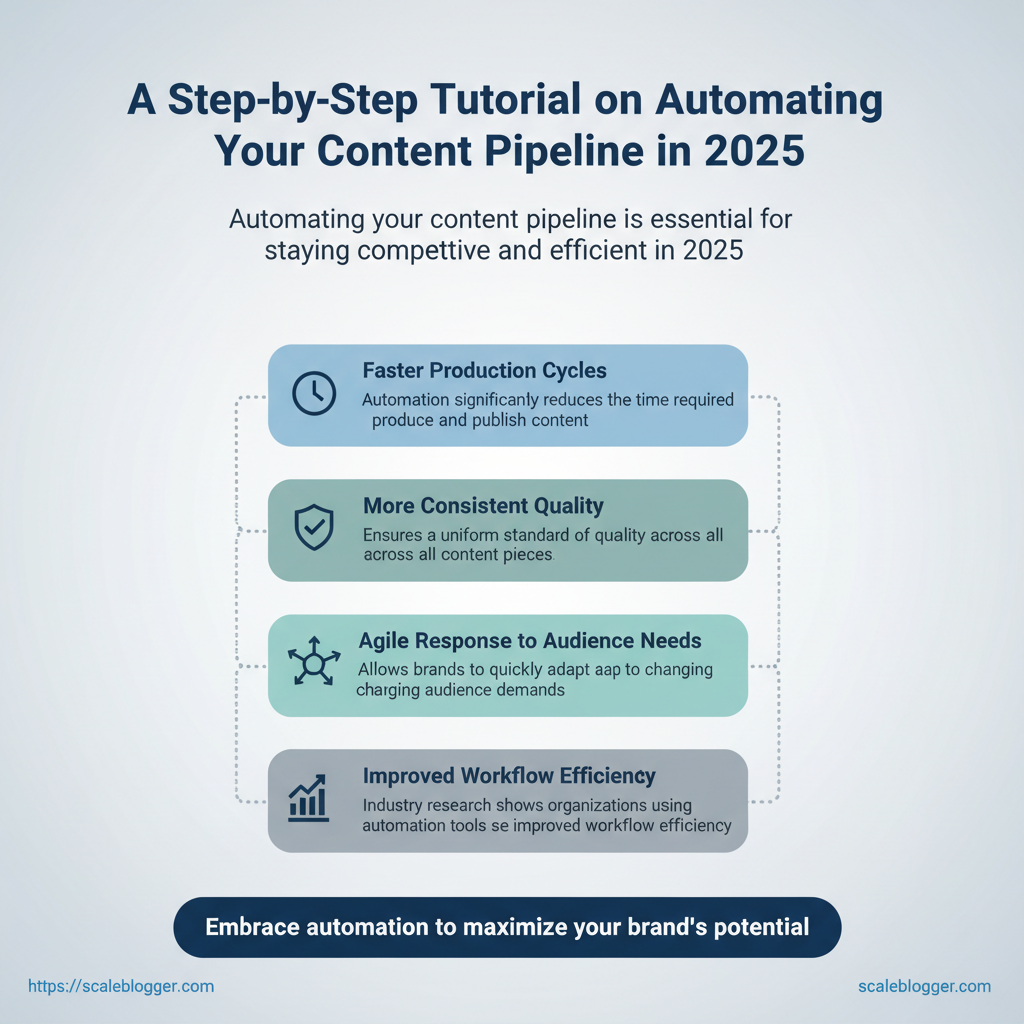
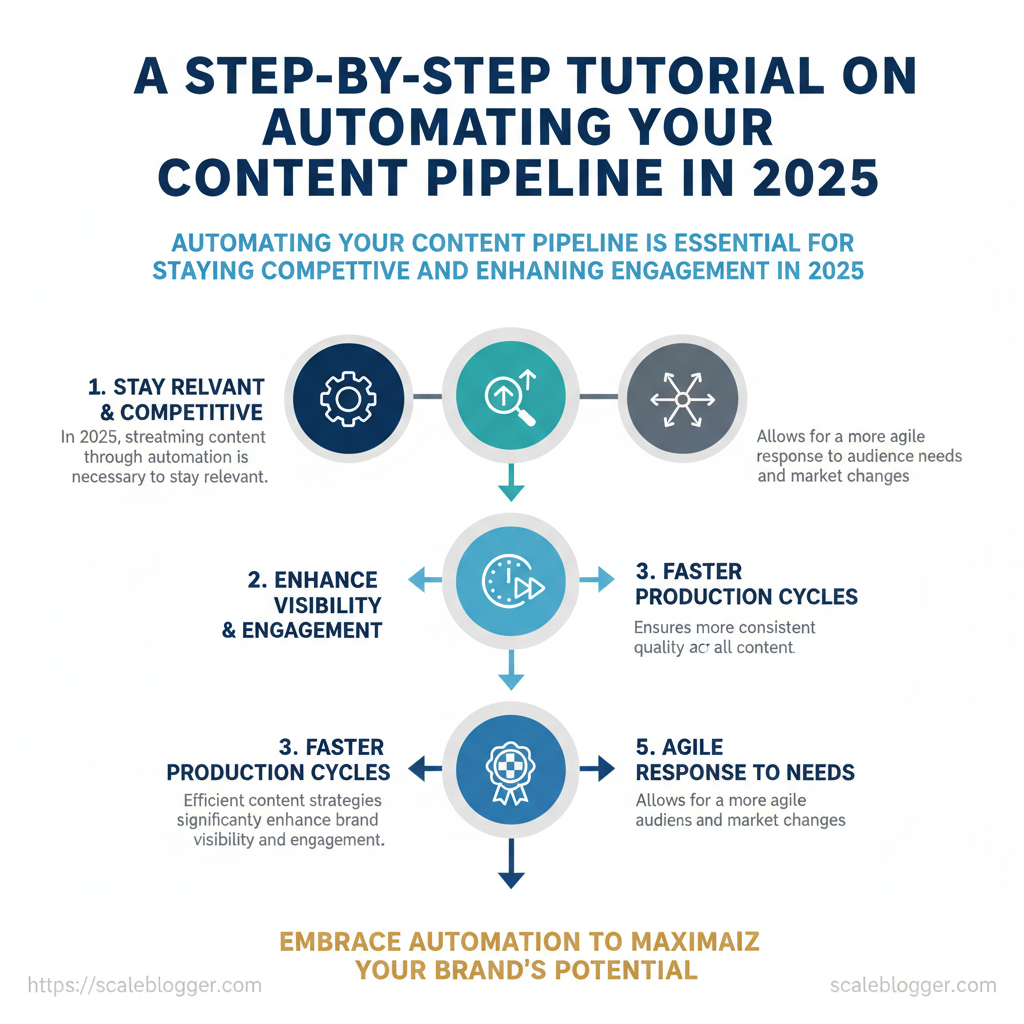
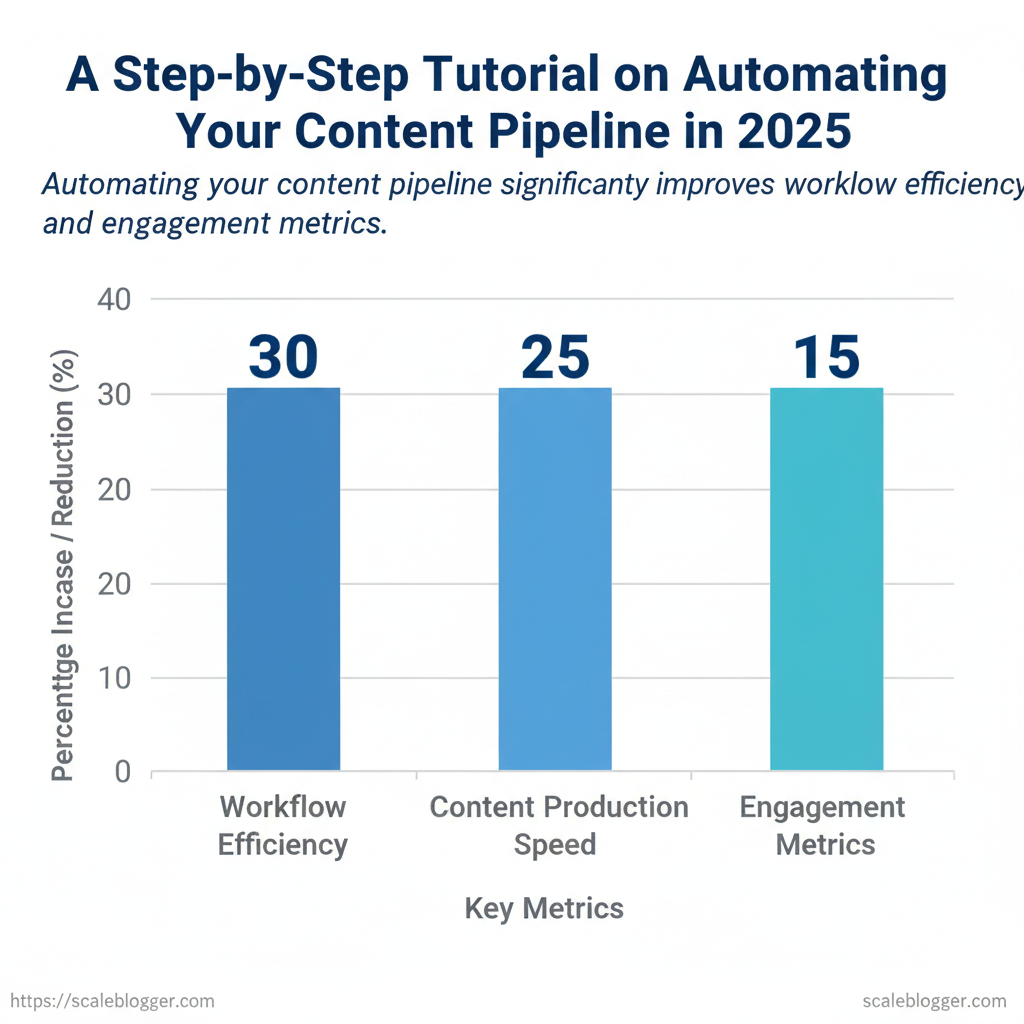
Industry research shows organizations using automation tools see improved workflow efficiency and engagement metrics. By leveraging platforms like Scaleblogger, teams can let AI handle routine tasks and focus more on creativity and strategy.
What you can expect from this tutorial
Embracing automation is no longer optional; it helps teams move faster and work smarter in a fast-paced digital environment. Let’s dive into how you can efficiently automate your content pipeline and use these tools to maximize your brand’s potential.
Explore more about content automation tools at Scaleblogger.com
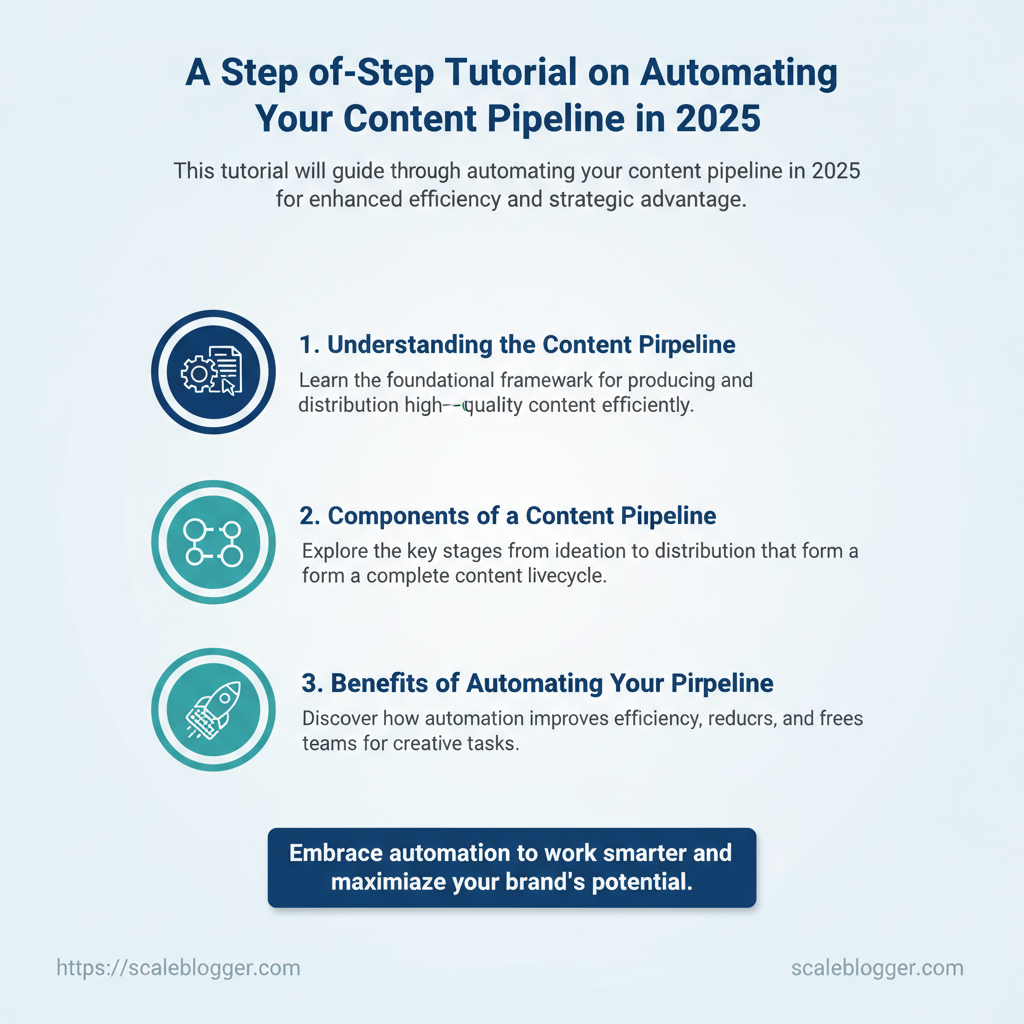
Understanding the Content Pipeline
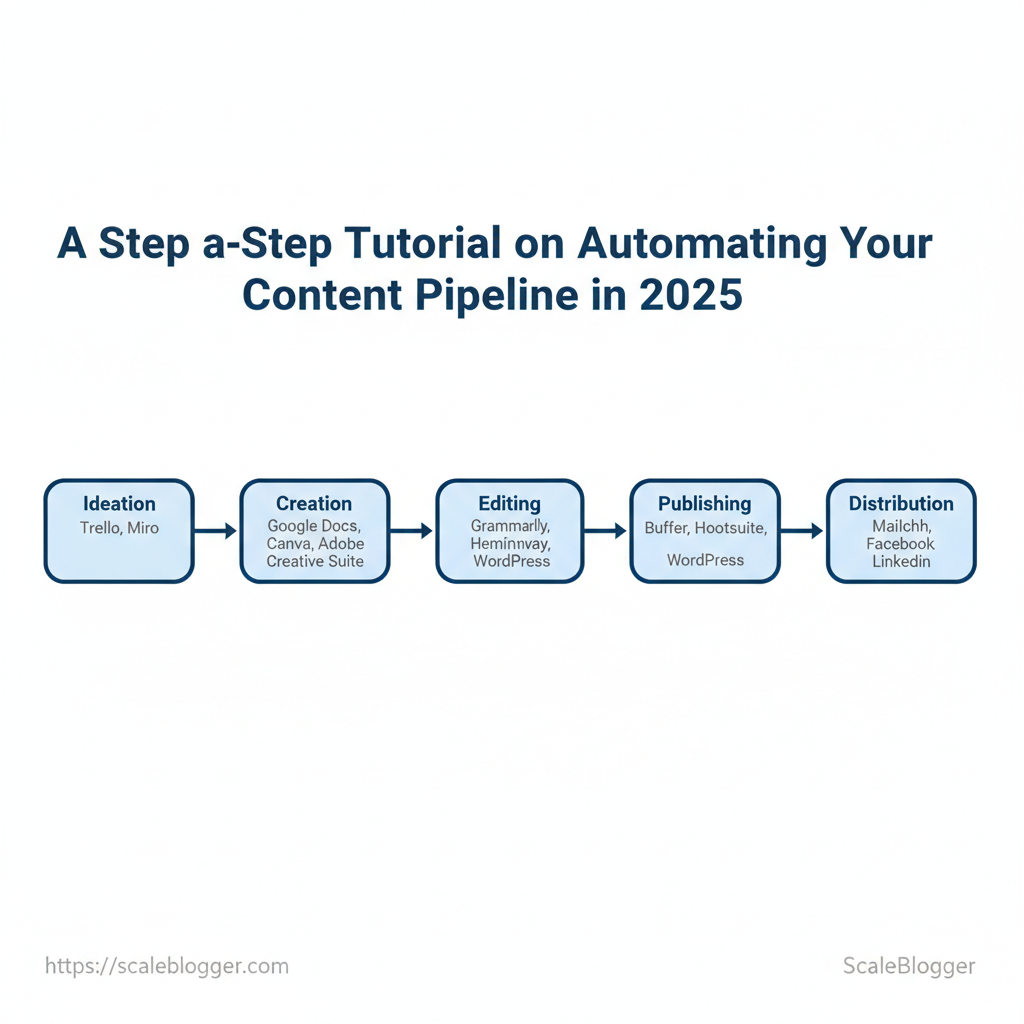
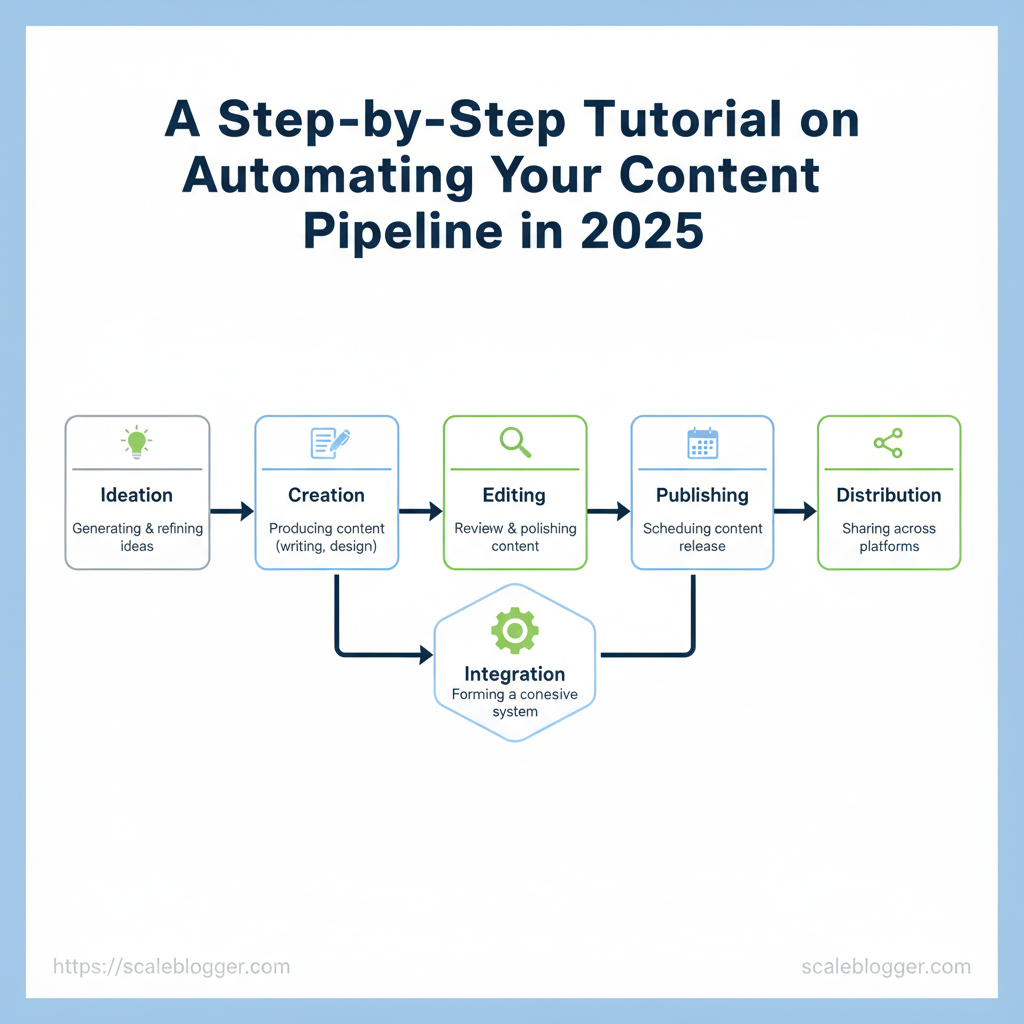
The content pipeline is a system for efficiently producing and distributing high-quality content. It covers stages such as ideation, creation, editing, publishing, and distribution. Each stage helps ensure content meets audience needs and aligns with strategic goals.
Streamlining these processes reduces time-to-market and boosts engagement.
The content pipeline promotes a systematic approach to development. This is crucial in today’s fast-paced digital world where relevance and timeliness are important. By applying automation and AI, teams can each phase of the pipeline, using resources more effectively while improving content quality.
Components of a Content Pipeline
The content pipeline typically includes several key components that move work from concept to delivery:
- Ideation Process
Ideation is where topics are generated and refined. This may involve brainstorming, audience research, and content audits, all aimed at identifying ideas that resonate with your target audience.
- Content Creation Techniques
Once ideas are set, content creation starts—writing, design, video production, or other creative work. Collaboration tools can make this stage faster and more effective.
- Editing Workflows
Editing polishes content before it goes live. Multiple review rounds and collaborative editing tools help this phase and maintain quality.
- Publishing Strategies
Publishing involves deciding when and where to release content. Audience behavior and platform algorithms inform the best timing and channels.
- Distribution Channels
Distribution maximizes reach through social media, email newsletters, content syndication, and other channels. Thoughtful distribution amplifies engagement.
Components Overview Table
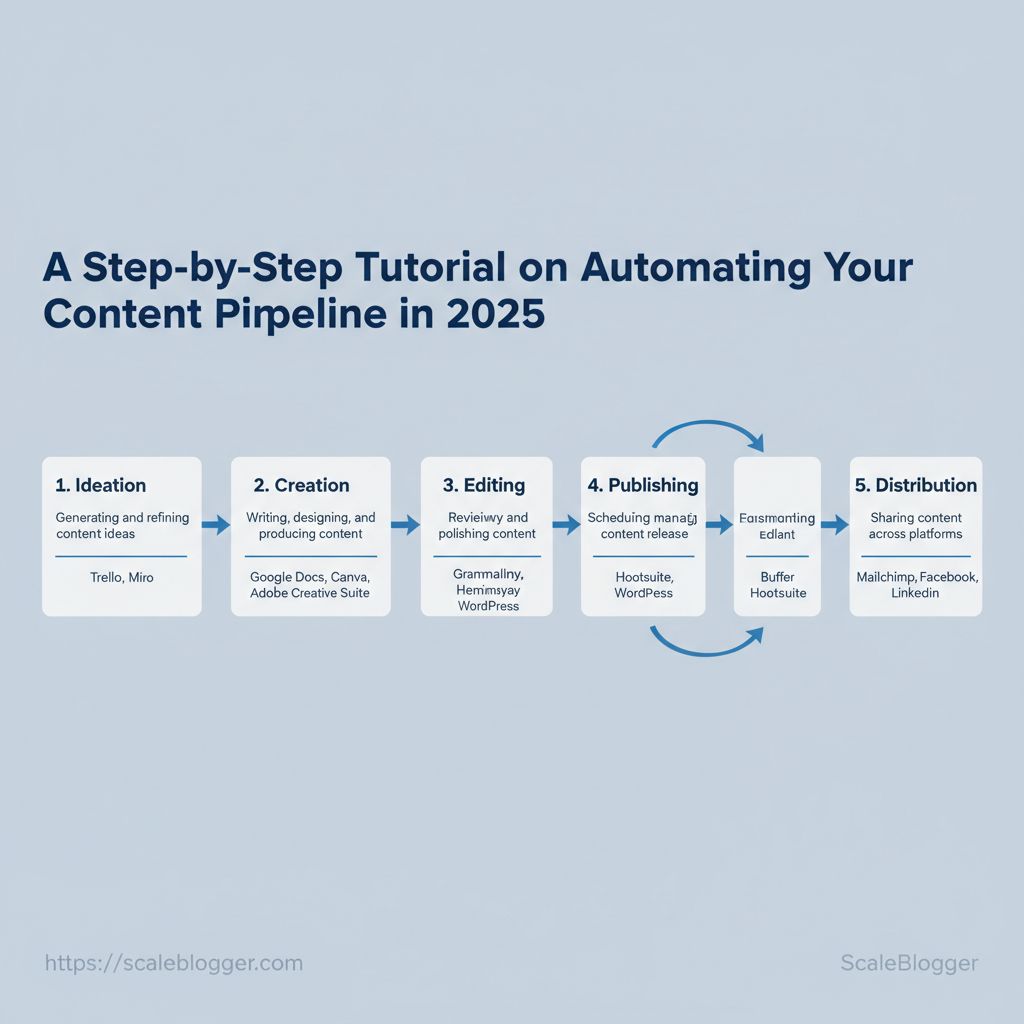
Here’s a concise overview of the components involved in a typical content pipeline:
Ideation |
Generating and refining content ideas |
Trello, Miro |
Creation |
Writing, designing, and producing content |
Google Docs, Canva, Adobe Creative Suite |
Editing |
Reviewing and polishing content |
Grammarly, Hemingway, WordPress |
Publishing |
Scheduling and managing content release |
Buffer, Hootsuite, WordPress |
Distribution |
Sharing content across platforms |
Mailchimp, Facebook, LinkedIn |
Understanding the distinct components of a content pipeline helps teams pinpoint improvement areas and implement more effective strategies. Focusing on automation and streamlined workflows enhances productivity and content quality.
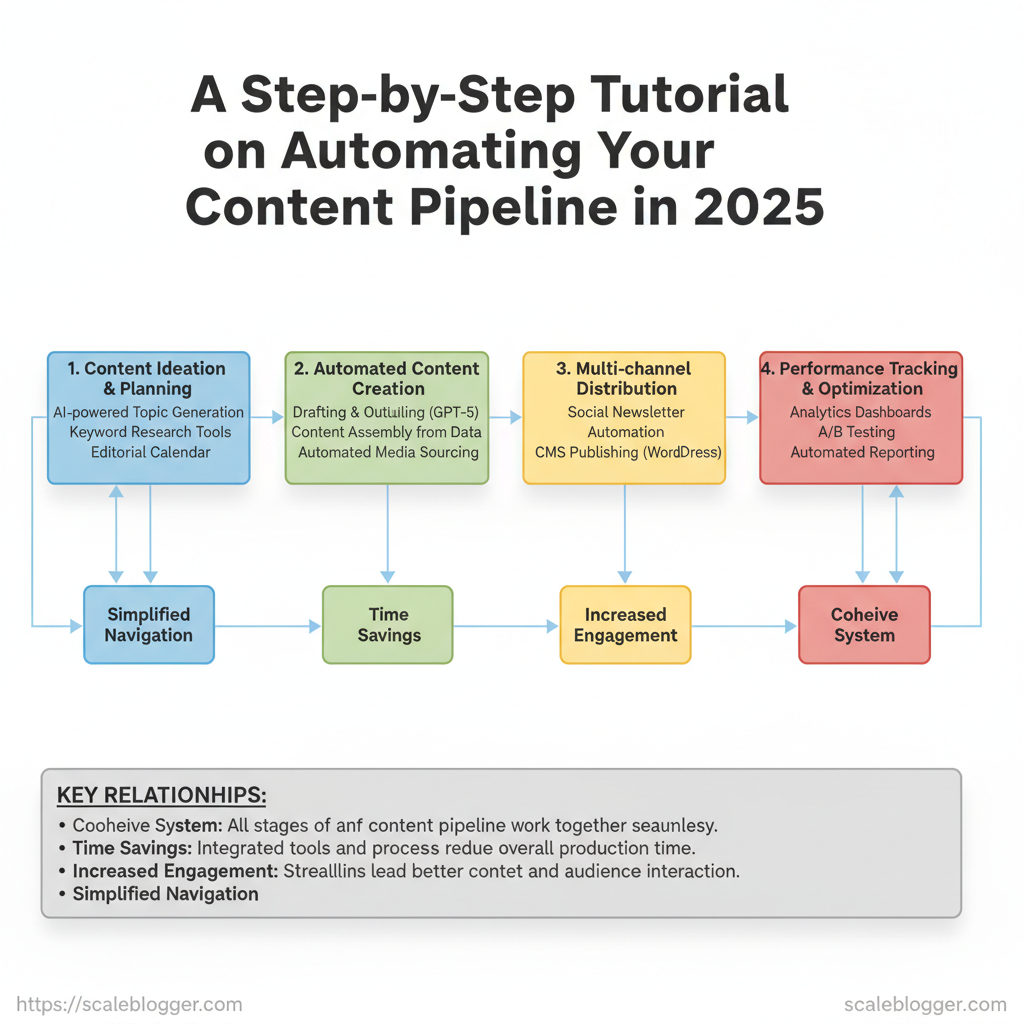
When these components are integrated effectively, they form a cohesive system that saves time and increases engagement. With the right tools and processes, teams can navigate the complexities of content creation and distribution more easily.
Benefits of Automating Your Content Pipeline
Automating your content pipeline improves efficiency and time management across the content lifecycle. AI and automation tools can handle repetitive tasks, reduce human error, and free teams to concentrate on strategy and creative work. For example, automating content scheduling can reclaim hours previously spent on manual publishing, allowing creators to invest that time in ideation and strategy.
With appropriate automation tools—such as those available from Scaleblogger—organizations can workflows and reduce errors.
Automation helps in several areas: efficiency, time management, and error reduction. Automating ideation and drafting can shorten the time required to produce a high-quality blog post. Industry data suggests that organizations implementing automation may cut the time they spend on manual tasks, enabling them to create more content with less effort.
That shift not only saves time but also lets teams respond quickly to analytics and feedback.
Efficiency Gains from Automation
Efficient content pipelines are crucial for staying competitive. Automation can enhance efficiency in these ways:
Recent research shows that businesses can save about 30% of their content production time by automating routine tasks.
Time Management Benefits
Time savings is a compelling reason to automate your content pipeline. Automation impacts time management by:
Table: Efficiency and Time Management
Presenting time-saved statistics helps illustrate the practical benefits of automation.
Content Ideation |
10 |
3 |
7 |
Drafting |
15 |
5 |
10 |
Editing |
8 |
3 |
5 |
Publishing |
5 |
1 |
4 |
Distribution |
4 |
1 |
3 |
Automating tasks like drafting and editing can save a lot of time, allowing teams to focus on more valuable activities like strategy and innovation. These time savings make automation a worthwhile investment for content-driven organizations.
Integrating automation into your content strategy improves operational efficiency and empowers your team to prioritize impactful work. Organizations that embrace AI content automation, including tools from Scaleblogger, are better positioned to compete in the digital landscape.
Tools for Automating Your Content Pipeline
Automation in content management simplifies workflows, allowing your team to focus on creativity and strategy instead of repetitive tasks. Content management systems (CMS) are central to this efficiency, supporting content creation, scheduling, performance analysis, and optimization. Leveraging automation features helps drive engagement and increase visibility.
Several CMS platforms offer powerful automation features for different needs. WordPress, HubSpot, and Contentful, for example, provide automated publishing schedules, SEO tools, and performance tracking. When choosing a CMS, compare pricing and automation capabilities to find the best fit for your organization.
Below is a closer look at some leading content management systems and the automation features they offer.
Popular Content Management Systems for Automation Features
WordPress |
SEO tools, automated posting, plugins |
Free + hosting |
Bloggers, SMEs |
HubSpot |
Marketing automation, analytics, CRM |
Starts at $45/mo |
Marketing teams |
Contentful |
API-first, multi-channel publishing |
Starts at $39/mo |
Enterprises |
Wix |
Drag-and-drop, social media integration |
Free + premium options |
Small businesses |
Joomla |
Multi-user support, customizable templates |
Free + hosting |
Developers |
Drupal |
Highly customizable, strong security |
Free + hosting |
Large organizations |
Squarespace |
Visual editing, e-commerce integration |
Starts at $12/mo |
Creatives, portfolios |
Ghost |
Publishing-focused, SEO tools |
Starts at $9/mo |
Writers, publishers |
The variety of features across these CMS options highlights the importance of aligning your platform choice with your content goals. From SEO analytics to multi-channel publishing, the right tools can boost strategy and execution.
Automation isn’t only about saving time; it’s about giving your team tools that enable more impactful content. Choosing a CMS that matches your goals frees creators to focus on high-value activities and drives better results in a competitive digital landscape.
Implementing Automation in Your Content Pipeline
To implement automation effectively, begin by assessing current workflows. Identify bottlenecks and set clear automation goals tailored to your team’s needs. Next, pick tools that fit those goals and easily integrate with your current systems.
Finally, monitor results and continuously to ensure your automation delivers the intended outcomes. This structured approach improves efficiency and content quality.
Step 1: Assess Your Current Pipeline
Analyzing current workflows: Map your content processes from ideation and writing to editing and publishing. Visual tools like flowcharts or project management platforms can help make the workflow visible.
Identifying bottlenecks: Find stages that cause delays—lengthy approvals or slow production are common culprits. Engaging your team in this analysis uncovers pain points that aren’t always obvious.
Setting automation goals: Define what success looks like. Are you aiming to speed up publishing, improve content quality, or enhance collaboration? Clear, measurable goals will direct your tool selection and implementation.
📥 Download: Content Pipeline Automation Checklist (PDF)
📥 Download: Content Pipeline Automation Checklist (PDF)
Step 2: Choose the Right Tools
Criteria for tool selection: Pick tools that meet current needs and can scale with your operations. Consider usability, support, and integration capability with your existing stack.
Trial and learning: Use trial periods to test platforms in real scenarios. Hands-on testing helps you determine which tools genuinely improve your workflow.
Integration with existing tools: Ensure chosen tools integrate with your systems to reduce adoption friction and enhance efficiency.
Step 3: Monitor and
Setting KPIs for automation: Define Key Performance Indicators aligned with your goals—content production speed, engagement rates, or conversion metrics, for example.
Tools for monitoring: Use analytics platforms that provide real-time insights to spot trends and areas that need attention.
Continuous improvement strategies: Automation isn’t set-and-forget. Regularly review KPIs and adjust strategies based on data and team feedback to keep improving workflows.
Approaching automation thoughtfully helps your content team operate more efficiently while maintaining high standards of quality. This makes it easier to harness the full potential of your content strategy and unlock greater creativity and engagement.
Case Studies of Successful Automation
Real-world examples show the practical impact of AI-driven automation. Two cases below illustrate how automation can deliver measurable efficiency and effectiveness gains.
Company A: Revolutionizing Content Creation
Overview: Company A operates in digital marketing and needed to produce consistent, high-quality content under tight deadlines.
Automation Process Implemented:
Results and Impact:
Their transformation shows how automation can enhance productivity and improve client outcomes.
Company B: Overcoming Challenges with Automation
Overview: Company B, a mid-sized e-commerce retailer, needed to solve inventory and customer service inefficiencies that limited growth.
Challenges Faced:
Key Takeaways from Their Experience:
Their experience demonstrates that automation can resolve operational challenges and improve efficiency and customer satisfaction.
These success stories highlight the value of integrating automation into both content strategies and operational processes. Organizations that adopt these technologies can unlock efficiency and engagement gains across their operations.
To wrap up, adopting AI and automation in your content strategy can enhance visibility and engagement while streamlining workflows. Brands using AI writing and automation tools often report faster production cycles and higher audience engagement, showing automation’s potential as a strategic advantage.
As the landscape evolves, staying ahead requires exploring end-to-end automation options for content creation and publishing. Consider how integrating AI-driven solutions can simplify processes and improve output quality.
To learn more about content automation tools and how they can support your strategy, visit Scaleblogger.com. Their resources can help you evaluate approaches such as keyword research and topic clustering as part of a content pipeline.
