Many brands publish content and still feel invisible. Increasing search traffic without reinforcing identity wastes time and undermines loyalty, revenue, and long-term growth. Strategic blogging that aligns keywords, voice, and audience intent turns organic search into a reliable channel for both discovery and distinct brand positioning.
When blogging with SEO branding in mind, the goal shifts from chasing rankings to shaping perception. Thoughtful `content optimization` means using search signals to amplify the brand narrative, not dilute it. That discipline increases brand visibility in ways that convert curiosity into preference and repeat engagement.
Picture a product marketing team that reorganizes its pillar content by audience intent and sees organic visits become the primary referral source for product trials. That outcome starts with mapping brand attributes to keyword clusters, tightening on-page messaging, and measuring engagement beyond sessions.
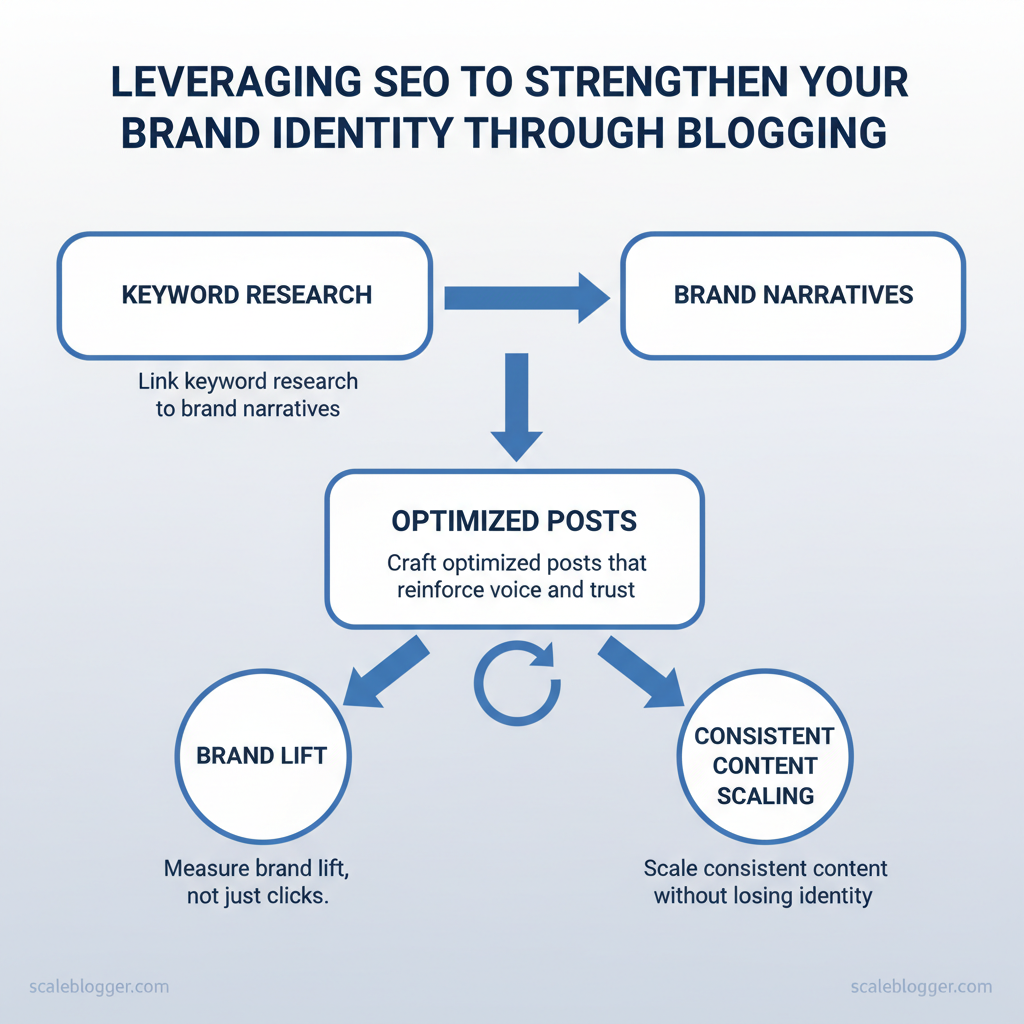
- How to link keyword research to brand narratives
- Crafting optimized posts that reinforce voice and trust
- Metrics that prove brand lift rather than just clicks
- Workflow tactics to scale consistent content without losing identity
Core Content
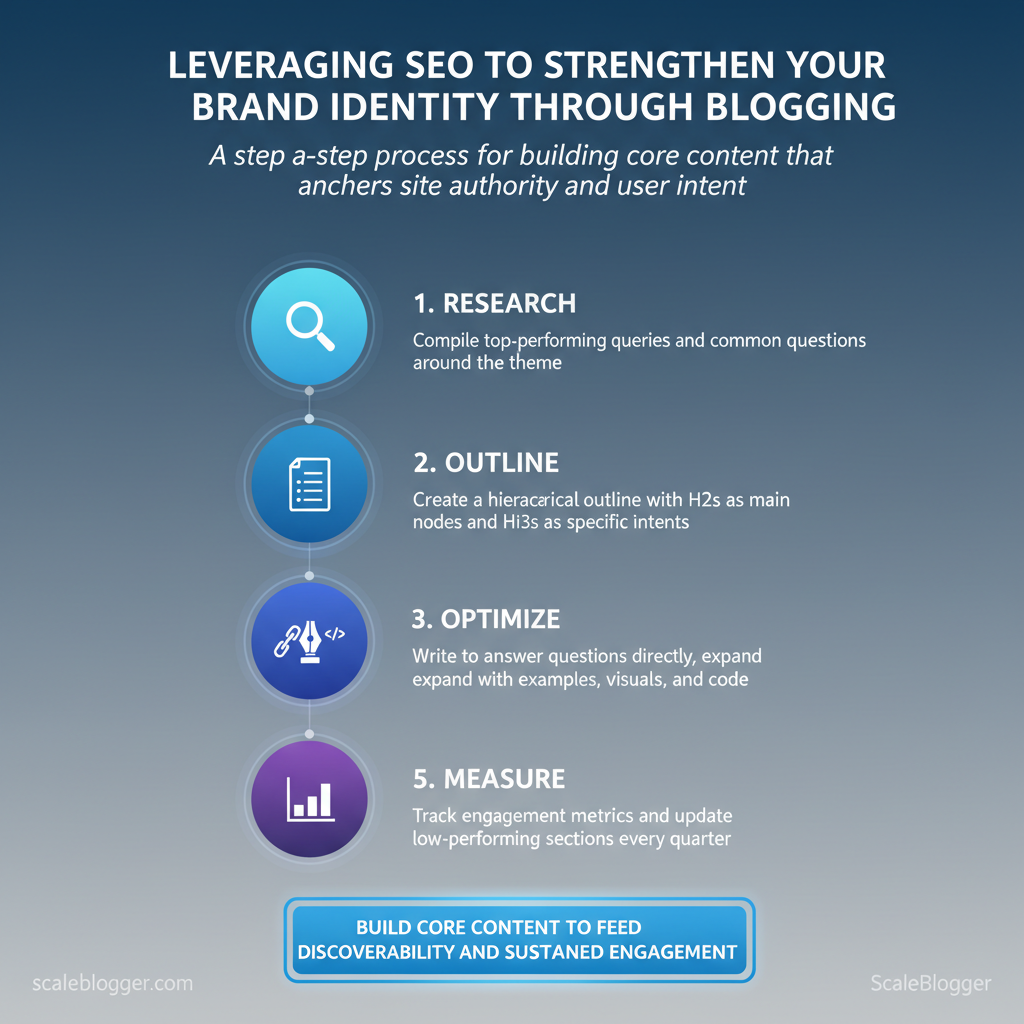
Core content anchors a site’s authority by answering user intent with depth, structure, and measurable relevance. Start by treating each pillar page as a primary knowledge node: define the problem, map the searcher journey, and deliver exhaustive, modular content that’s easy to update. This is the content that search engines and returning readers rely on to understand what the site owns.
What to include and why it matters
- Focused topic scope: cover a single semantic theme so internal linking and topical authority composes naturally.
- Search intent alignment: match informational, transactional, or navigational intent with the primary content format.
- Modular sections: use discrete subtopics that can be reused in social posts, FAQs, or email sequences.
- Evidence and examples: include case examples, `how-to` snippets, and short templates to increase practical value.
- Content scoring: apply a simple rubric—completeness, readability, topical depth, and actionability—to prioritize updates.
Concrete example – For a SaaS “onboarding” pillar, open with the onboarding definition, then include a 7-step checklist, two short case studies showing conversion lifts, and a reusable email template in a code block. That gives both strategic context and tactical artifacts readers can apply immediately.
Market data shows long-form, well-structured pages tend to dominate topic clusters when they prioritize user intent and update cadence.
Practical tips and common pitfalls
- Avoid duplication: consolidate overlapping content rather than creating thin variations.
- Keep updating cadence: schedule reviews tied to product or market changes.
Link-worthy assets to build: a content scoring spreadsheet, a modular outline template, and a checklist for intent mapping. Understanding these principles helps teams move faster without sacrificing quality. When implemented correctly, core content becomes the engine that feeds discoverability and sustained engagement.
Conclusion
After refining what makes content both discoverable and identity-preserving, the clear path forward is to publish less noise and invest in targeted, repeatable processes that amplify brand signals. Focus editorial calendars on audience intent, pair SEO-focused topics with unique brand narratives, and automate repetitive production steps so strategy—not busywork—drives output. Practical examples earlier showed a niche B2B brand that doubled organic conversions by consolidating topic clusters and another publisher that regained subscriber trust after shifting pillar pages to reflect brand voice. These demonstrate that improving visibility and strengthening identity are complementary, not mutually exclusive.
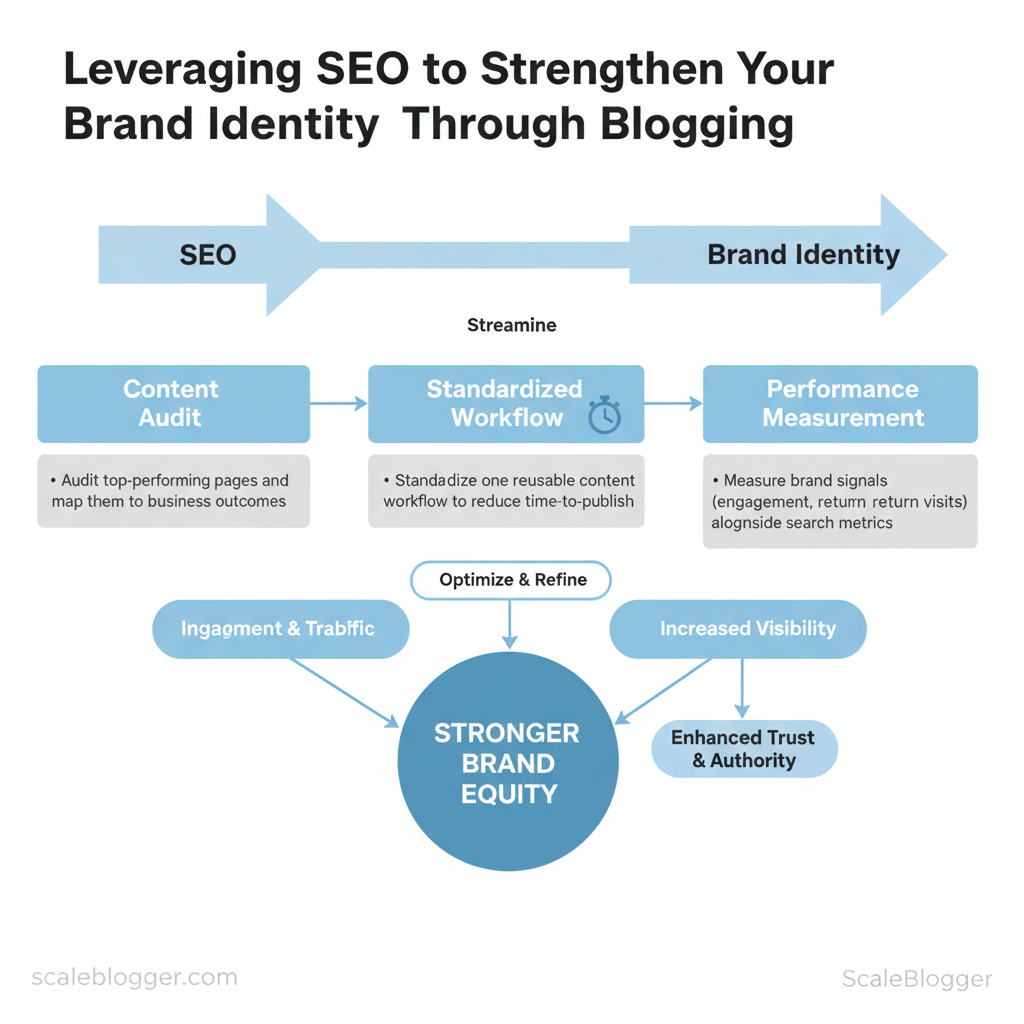
Take three actions now to move this from plan to results: – Audit your top-performing pages and map them to business outcomes. – Standardize one reusable content workflow to reduce time-to-publish. – Measure brand signals (engagement, return visits) alongside search metrics.
If questions linger—How much content should be repurposed? Start with your top 10% of pages. How do you automate without losing voice? Use templates plus a final human edit. For teams looking to streamline execution and scale content workflows, platforms like Learn more about Scaleblogger.com can help automate publishing, optimize topic clusters, and free editorial capacity for strategic work. Take the next step: pick one process to standardize this week and track the impact for 30 days.
📥 Download: SEO Blogging Brand Identity Checklist (PDF)